Résumer le contenu avec:




La question du modèle en IA vocale semble technique au premier abord : quel LLM l'agent téléphonique doit-il utiliser ? En production, toutefois, le nom du modèle ne suffit pas à garantir la qualité de la conversation. Les entreprises doivent évaluer trois couches simultanément : l'architecture de la conversation, le modèle de langage et le processus spécifique que l'agent doit accomplir de manière fiable.
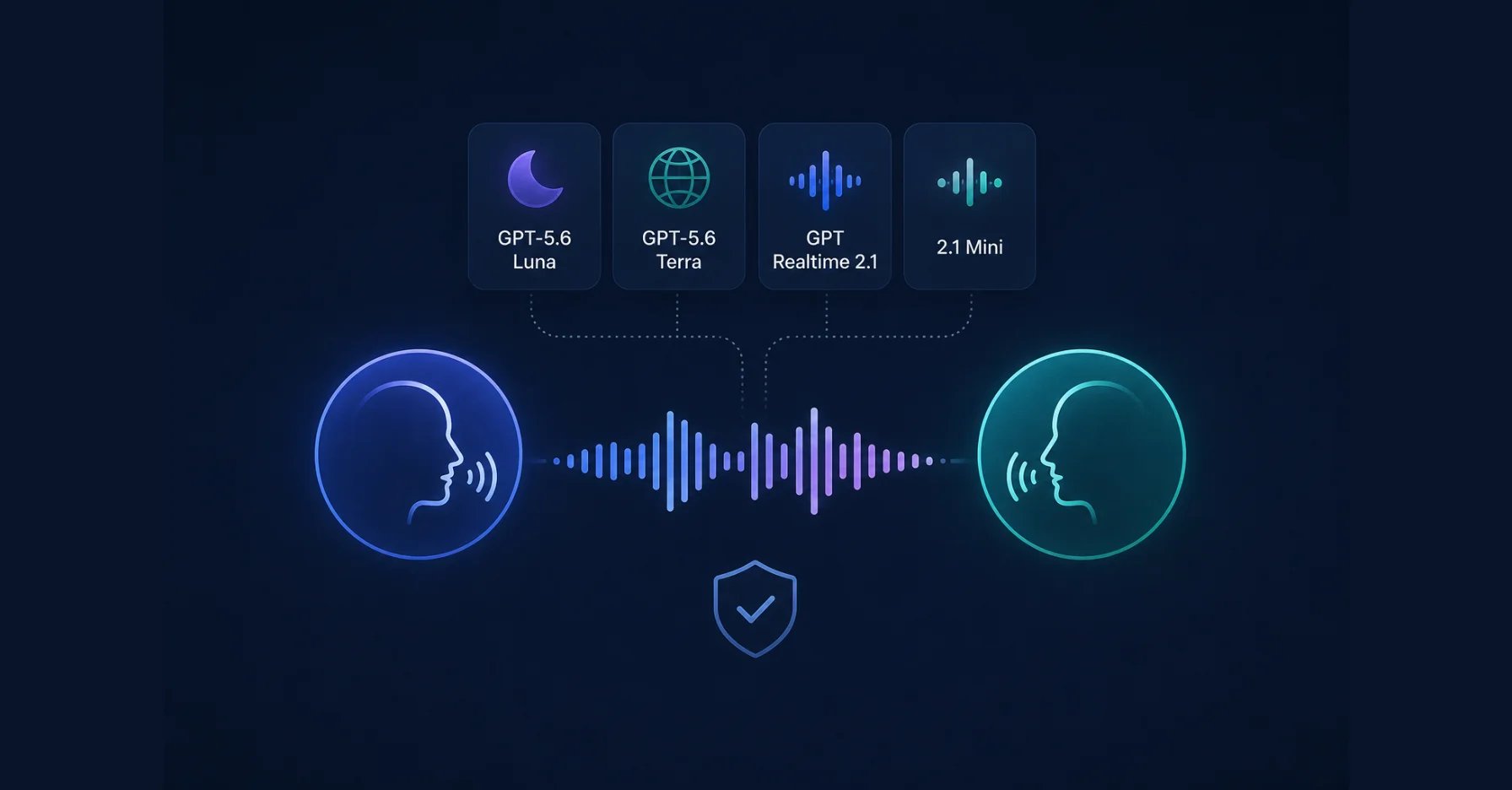
Famulor a rendu deux nouvelles familles de modèles disponibles en juillet 2026 : GPT-5.6 Luna et GPT-5.6 Terra en mode Pipeline, ainsi que GPT Realtime 2.1 et GPT Realtime 2.1 Mini pour le speech-to-speech et Dualplex™. Il ne s'agit pas d'un simple classement allant du « plus rapide » au « plus intelligent ». C'est une boîte à outils adaptée à différentes exigences opérationnelles.
Ce guide montre aux équipes opérationnelles, CX et IT comment effectuer un choix défendable en utilisant des cas de test, des critères de mesure et un déploiement structuré autour de conversations réelles plutôt que d'une démonstration parfaite.
1. Choisir l'architecture avant le modèle
Une erreur courante lors des achats est de comparer les modèles de manière isolée. En IA vocale, le chemin de traitement compte tout autant. Famulor prend en charge trois modes pertinents :
| Mode | Chemin de traitement | Modèles correspondants | Usage idéal |
|---|---|---|---|
| Pipeline | Speech-to-text → LLM → text-to-speech | GPT-5.6 Luna, GPT-5.6 Terra | Prompts complexes, données structurées, réponses longues et voix de marque contrôlées |
| Speech-to-speech | Traitement vocal multimodal direct | GPT Realtime 2.1, GPT Realtime 2.1 Mini | Prise de parole rapide, réponses courtes et dialogue naturel |
| Dualplex™ | Compréhension multimodale avec sortie vocale premium séparée | GPT Realtime 2.1, GPT Realtime 2.1 Mini | Faible latence avec une voix de marque premium ou clonée |
La documentation sur les modes d'assistant indique des plages typiques d'environ 800 à 1 500 millisecondes pour le mode Pipeline et de 300 à 600 millisecondes pour le speech-to-speech. Ce sont des valeurs indicatives : la langue, le modèle, les conditions réseau et les appels d'outils influencent la vitesse perçue. L'objectif pratique n'est pas d'obtenir le chiffre le plus bas en laboratoire, mais de maintenir une conversation fluide et correcte tout au long du flux de travail visé.
2. Ce que les nouveaux modèles signifient en pratique
GPT-5.6 Luna et GPT-5.6 Terra : candidats pour des charges de travail Pipeline exigeantes
GPT-5.6 Luna et GPT-5.6 Terra sont disponibles dans le mode Pipeline de Famulor. Selon le journal des modifications produit de Famulor, la nouvelle génération vise un raisonnement plus affiné, un meilleur respect des instructions et une gestion plus naturelle des conversations longues et multi-étapes.
Pour les équipes en entreprise, un point est crucial : Famulor ne déclare pas actuellement de vainqueur universel entre Luna et Terra. C'est la bonne approche. Un modèle performant dans un support de premier niveau complexe ne gagnera pas automatiquement sur un flux de qualification de rendez-vous concis ou une capture de données hautement structurée. Considérez les deux comme des candidats à la mise en production et comparez-les sur les mêmes cas de conversation réels.
GPT Realtime 2.1 : conversation directe et naturelle pour les interactions exigeantes
GPT Realtime 2.1 est disponible pour les assistants speech-to-speech et Dualplex. Famulor décrit une meilleure adhésion aux prompts et une gestion plus naturelle des noms, des chiffres et des interruptions. Cela le rend pertinent lorsque les conversations doivent réagir rapidement tout en capturant des détails critiques pour l'entreprise tels que des numéros de client, des adresses, des horaires de rendez-vous ou des variantes de produits.
GPT Realtime 2.1 Mini : l'option plus légère pour le volume
GPT Realtime 2.1 Mini est positionné comme une option plus légère et plus rapide pour les assistants à haut volume ou plus simples. Les candidats typiques incluent les vérifications de statut, la prise de rappel, la qualification courte, les conversations FAQ et les processus de réservation strictement délimités. Mais « Mini » ne doit pas être confondu avec « toujours moins cher sur l'ensemble du processus ». S'il génère des répétitions fréquentes, des erreurs de classification ou des transferts inutiles, le coût opérationnel peut s'avérer plus élevé.
3. Une matrice de décision pour les processus réels d'IA vocale
| Exigence | Point de départ | Pourquoi |
|---|---|---|
| Politiques complexes, sources de données multiples, explications longues | Comparer Luna et Terra en Pipeline | Plus de contrôle sur le prompt, le traitement du texte et la sortie vocale |
| Conversations de vente ou de réservation courtes et dynamiques | Speech-to-speech avec Realtime 2.1 | Prise de parole rapide et réactions naturelles |
| Très haut volume de conversations simples | Realtime 2.1 Mini comme base de référence | Positionné pour des charges de travail plus légères et rapides |
| Voix de marque ou clonée avec faible latence | Dualplex avec Realtime 2.1 | Combine compréhension multimodale et sortie vocale contrôlée |
| Divulgations ou confirmations devant être énoncées intégralement | Choisir le mode approprié et désactiver les interruptions | Famulor prend désormais en charge ce paramètre en Pipeline, speech-to-speech et Dualplex |
La capacité doit être intégrée à cette décision. Planifiez les minutes, la charge de pointe et la simultanéité avant de faire d'un modèle le standard de production.
Planifiez minutes, pics et plan
Estimez la capacité Voice AI nécessaire et le plan le plus adapté.
Famulor
Voice AI
Minutes IA mensuelles
11 088
Plan recommandé
Agency
Appels simultanés en pic
3
Heures automatisées
185
4. Un plan de test en cinq étapes pour l'entreprise
Étape 1 : Définir le processus comme une chaîne de résultats réussis
Ne commencez pas par « l'agent doit sembler naturel ». Définissez une finalisation mesurable : identité confirmée, intention classée, dossier CRM trouvé, rendez-vous réservé, confirmation envoyée. Chaque étape nécessite une condition de succès claire et une solution de repli prévue.
Étape 2 : Construire un ensemble de référence à partir de modèles de conversation réels
Créez une petite suite représentative de situations anonymisées. Incluez des demandes courantes et des cas limites difficiles :
- Noms à l'orthographe inhabituelle et termes aux sonorités similaires
- Numéros de téléphone, codes postaux, heures et identifiants de commande
- Interruptions, auto-corrections et bruit de fond
- Demandes en plusieurs parties nécessitant des questions de suivi
- Données CRM manquantes ou créneaux de rendez-vous indisponibles
- Délais d'attente des outils, réponses invalides et escalade humaine sécurisée
Étape 3 : Tester l'architecture et le modèle séparément
Comparez d'abord les modes sur le même résultat de processus. Comparez ensuite les modèles au sein du mode le plus approprié. Cela évite aux équipes d'attribuer un avantage architectural à un modèle. Utilisez des appels de test sortants ainsi qu'un numéro dédié pour les tests entrants ; le guide de test Famulor couvre les deux approches.
Étape 4 : Utiliser une grille d'évaluation pondérée
Une grille d'évaluation pratique peut couvrir cinq dimensions :
- Succès de la tâche : Le processus s'est-il terminé complètement et correctement ?
- Précision des données : Les noms, numéros et champs requis ont-ils été capturés correctement ?
- Respect des instructions : L'agent a-t-il respecté les limites, l'ordre et les approbations ?
- Qualité de la conversation : La prise de parole, le ton et les interruptions étaient-ils appropriés ?
- Qualité opérationnelle : Les outils, transferts, journaux et tentatives ont-ils fonctionné comme prévu ?
Pondérez le score en fonction du risque. La vitesse peut être primordiale dans la prise de rendez-vous ; les données contractuelles ou d'identité doivent privilégier la précision et une escalade sécurisée.
Étape 5 : Router les modèles par processus plutôt que d'imposer un défaut unique
Les grandes organisations ont rarement besoin d'un seul modèle pour chaque appel. Un agent Realtime léger peut capturer l'intention et l'urgence, tandis qu'un agent Pipeline gère un cas complexe. Différents assistants pour des sites, des langues ou des classes de risque peuvent également utiliser des configurations différentes. Le standard opérationnel n'est alors pas « un modèle », mais un routage contrôlé avec des seuils de qualité partagés.
5. Une mise à niveau de modèle ne remplace pas la gouvernance
Un meilleur raisonnement ou une parole plus naturelle ne corrige pas des autorisations floues. Définissez les données que chaque assistant peut lire, les actions qu'il peut exécuter et quand une approbation humaine est requise. Les actions en cours d'appel et les connexions MCP ne doivent recevoir que les systèmes et champs dont ils ont besoin. Testez les actions avec des paramètres avant de les activer dans des conversations réelles.
La minimisation des données, les règles de rétention et les journaux traçables sont tout aussi importants. Les flux de travail réglementés ou sensibles doivent ajouter une revue de confidentialité et de risque au déploiement. Famulor fournit une infrastructure allemande, un DPA et des processus configurables, tandis que l'organisation qui déploie reste responsable de son usage spécifique.
6. Un déploiement à moindre risque pour Luna, Terra et Realtime 2.1
- Établir la base : documentez le taux de complétion actuel, le taux de transfert, les types d'échec et la latence perçue.
- Effectuer un test fantôme : validez la nouvelle configuration avec des cas historiques ou simulés sans modifier le trafic client.
- Commencer par un petit segment en direct : activez un processus ou un site clairement délimité.
- Réviser quotidiennement : inspectez les conversations échouées, les appels d'outils, les interruptions et les champs capturés.
- Passer à l'échelle après une qualité stable : augmentez le volume progressivement et gardez un chemin de retour en arrière rapide.
Une mise à jour de modèle doit être traitée comme un changement de produit opérationnel : hypothèse, test, approbation et surveillance. Cela transforme une nouvelle capacité en une qualité de processus mesurable plutôt qu'en une simple entrée dans un menu déroulant.
Essayez notre Assistant IA
Découvrez à quel point notre assistant téléphonique IA sonne naturel.
Entrez vos coordonnées et recevez un appel de notre agent IA en quelques secondes.
L'agent est formé pour parler des services Famulor et prendre des rendez-vous.

Agent IA de démo
Représentant Famulor
Conclusion : le meilleur modèle d'IA vocale dépend de la charge de travail
GPT-5.6 Luna et Terra étendent les options Pipeline pour les conversations exigeantes en plusieurs étapes. GPT Realtime 2.1 cible la conversation directe et naturelle avec une meilleure adhésion aux prompts ; Realtime 2.1 Mini est une base de référence sensée pour les processus simples à haut volume. Dualplex combine un traitement multimodal rapide avec une sortie vocale premium contrôlée.
La bonne sélection ne provient pas d'un classement de modèles. Elle découle d'un processus clair, d'un ensemble de tests représentatif et d'une grille d'évaluation qui mesure ensemble les résultats commerciaux, la qualité des données et la sécurité opérationnelle. C'est à ce moment-là que la sélection de modèles devient une décision d'architecture d'entreprise plutôt qu'une question de goût.
FAQ
Quel modèle Famulor convient aux conversations de support complexes ?
Commencez par Pipeline et comparez GPT-5.6 Luna et GPT-5.6 Terra sur les mêmes cas de support. Pipeline offre plus de contrôle pour les données structurées, les réponses plus longues et les prompts complexes.
Quand GPT Realtime 2.1 Mini est-il le meilleur choix ?
Mini est une base de référence sensée pour les conversations simples, à haut volume et strictement délimitées. Décidez en fonction du coût total du processus et des taux d'erreur, pas seulement de la taille du modèle.
Puis-je utiliser une voix clonée avec une faible latence ?
Dualplex est le point de départ approprié car il combine une compréhension multimodale avec une sortie vocale premium et contrôlée. Validez la voix, la langue et le flux de travail lors d'un appel de test.
Une entreprise doit-elle se standardiser sur un seul modèle ?
Pas nécessairement. Un standard de qualité et de gouvernance partagé compte plus qu'un modèle unique. Différents processus peuvent être routés vers différents modes et modèles selon des règles contrôlées.

Rédacteur chez Famulor