Inhoud samenvatten met:




De modelvraag binnen Voice AI klinkt in eerste instantie technisch: welk LLM moet de telefoonagent gebruiken? In de praktijk bepaalt de modelnaam echter niet alleen de gesprekskwaliteit. Ondernemingen moeten drie lagen in samenhang evalueren: de gespreksarchitectuur, het taalmodel en het specifieke proces dat de agent betrouwbaar moet voltooien.
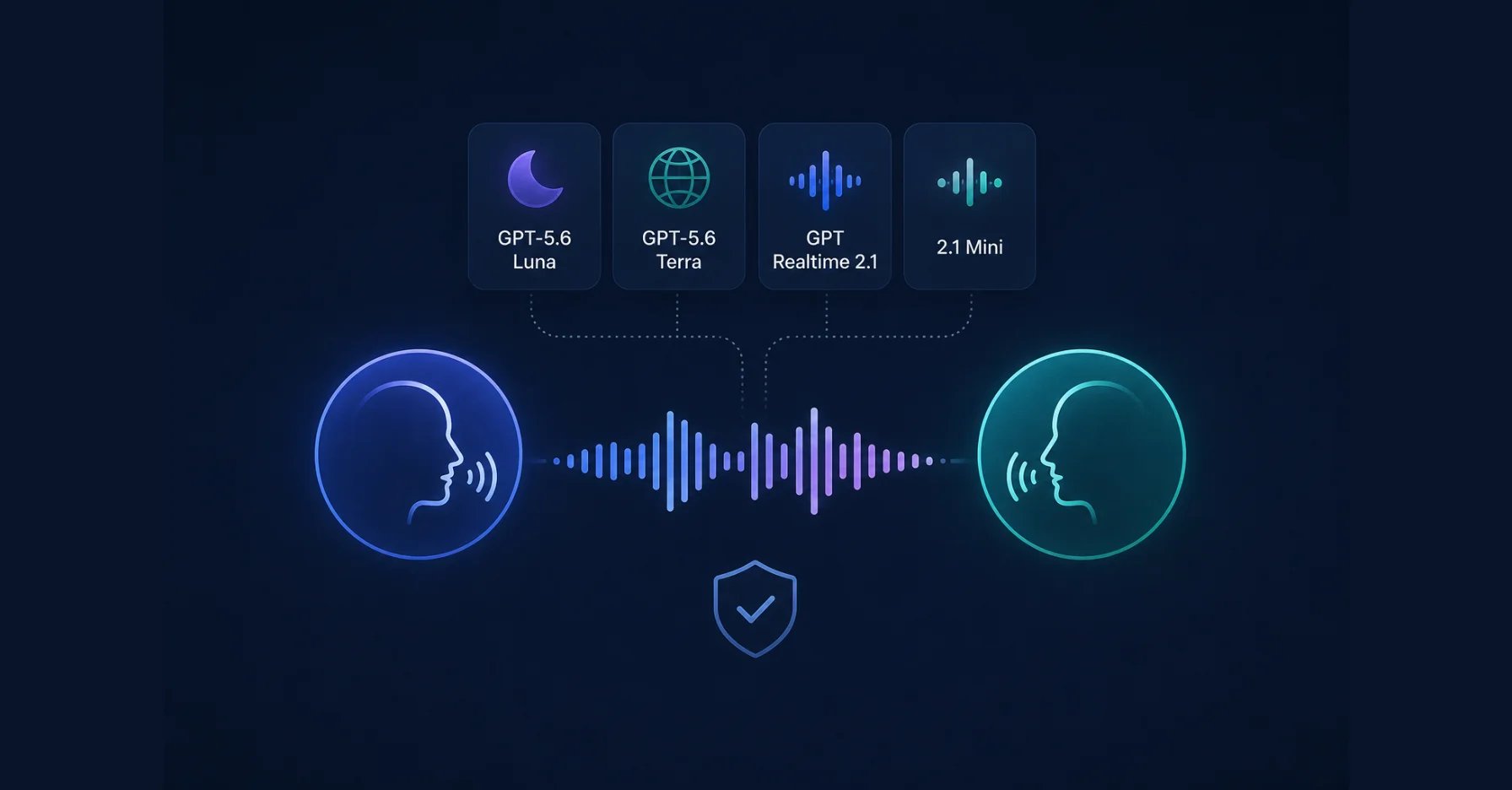
Famulor heeft in juli 2026 twee nieuwe modelfamilies beschikbaar gesteld: GPT-5.6 Luna en GPT-5.6 Terra in Pipeline-modus, plus GPT Realtime 2.1 en GPT Realtime 2.1 Mini voor speech-to-speech en Dualplex™. Dit is geen simpele ranglijst van “snel” naar “intelligent”. Het is een gereedschapskist voor uiteenlopende operationele vereisten.
Deze gids laat operations-, CX- en IT-teams zien hoe ze een verdedigbare keuze maken aan de hand van testcases, meetcriteria en een uitrol die gebouwd is rondom echte gesprekken in plaats van een perfecte demo.
1. Kies de architectuur vóór het model
Een veelgemaakte inkoopfout is het in isolatie vergelijken van modellen. Bij Voice AI is het verwerkingspad minstens zo belangrijk. Famulor ondersteunt drie relevante modi:
| Modus | Verwerkingspad | Bijpassende modellen | Sterke match |
|---|---|---|---|
| Pipeline | Speech-to-text → LLM → text-to-speech | GPT-5.6 Luna, GPT-5.6 Terra | Complexe prompts, gestructureerde data, langere antwoorden en gecontroleerde merkstemmen |
| Speech-to-speech | Directe multimodale spraakverwerking | GPT Realtime 2.1, GPT Realtime 2.1 Mini | Snelle beurtwisseling, korte antwoorden en natuurlijke dialoog |
| Dualplex™ | Multimodaal begrip met aparte premium spraakoutput | GPT Realtime 2.1, GPT Realtime 2.1 Mini | Lage latentie met een premium of gekloonde merkstem |
De documentatie over assistent-modi noemt typische bereiken van ongeveer 800–1.500 milliseconden voor Pipeline en 300–600 milliseconden voor speech-to-speech. Dit zijn richtwaarden: taal, model, netwerkomstandigheden en tool-aanroepen beïnvloeden de ervaren snelheid. Het praktische doel is niet het laagste getal uit het lab. Het is een gesprek dat gedurende de gehele workflow vloeiend en correct blijft.
2. Wat de nieuwe modellen in de praktijk betekenen
GPT-5.6 Luna en GPT-5.6 Terra: kandidaten voor veeleisende Pipeline-workloads
GPT-5.6 Luna en GPT-5.6 Terra zijn beschikbaar in de Pipeline-modus van Famulor. Volgens de product-changelog van Famulor richt de nieuwe generatie zich op scherpere redenering, betere opvolging van instructies en een natuurlijkere afhandeling van langere, meerstapsgesprekken.
Voor enterprise-teams is één punt van belang: Famulor roept momenteel geen universele winnaar uit tussen Luna en Terra. Dat is de juiste aanpak. Een model dat goed presteert bij complexe eerstelijns support, wint niet automatisch een beknopt proces voor afspraakbevestigingen of het vastleggen van gestructureerde data. Behandel beide als release candidates en benchmark ze tegen dezelfde echte gespreksvoorbeelden.
GPT Realtime 2.1: natuurlijke directe conversatie voor veeleisende interacties
GPT Realtime 2.1 is beschikbaar voor speech-to-speech en Dualplex-assistenten. Famulor beschrijft een betere opvolging van prompts en een natuurlijkere afhandeling van namen, cijfers en onderbrekingen. Dat maakt het relevant wanneer gesprekken snel moeten reageren en tegelijkertijd bedrijfskritische details moeten vastleggen, zoals klantnummers, adressen, afspraaktijden of productvarianten.
GPT Realtime 2.1 Mini: de lichtere optie voor volume
GPT Realtime 2.1 Mini is gepositioneerd als een lichtere, snellere optie voor assistenten met een hoog volume of eenvoudigere taken. Typische kandidaten zijn statuschecks, het aannemen van terugbelverzoeken, korte kwalificatievragen, FAQ-gesprekken en strak afgebakende boekingsprocessen. Maar “Mini” moet niet worden verward met “altijd goedkoper gedurende het hele proces”. Als het leidt tot frequente herhalingen, misclassificatie of onnodige doorverwijzingen, kunnen de operationele kosten hoger uitvallen.
3. Een beslissingsmatrix voor echte Voice AI-processen
| Vereiste | Startpunt | Waarom |
|---|---|---|
| Complexe richtlijnen, meerdere databronnen, langere uitleg | Benchmark Luna en Terra in Pipeline | Meer controle over prompt, tekstverwerking en spraakoutput |
| Korte, dynamische verkoop- of boekingsgesprekken | Speech-to-speech met Realtime 2.1 | Snelle beurtwisseling en natuurlijke reacties |
| Zeer hoog volume aan eenvoudige gesprekken | Realtime 2.1 Mini als basislijn | Gepositioneerd voor lichtere, snellere workloads |
| Merk- of gekloonde stem met lage latentie | Dualplex met Realtime 2.1 | Combineert multimodaal begrip met gecontroleerde spraakoutput |
| Disclaimers of bevestigingen moeten volledig worden uitgesproken | Kies de juiste modus en schakel onderbrekingen uit | Famulor ondersteunt de instelling nu in Pipeline, speech-to-speech en Dualplex |
Capaciteit hoort bij dezelfde beslissing. Plan minuten, piekbelasting en gelijktijdigheid voordat je een model als standaard voor productie instelt.
Plan minuten, piekbelasting en plan
Schat de Voice AI-capaciteit voor je use case en het best passende plan.
Famulor
Voice AI
Maandelijkse AI-minuten
11.088
Best passend plan
Agency
Gelijktijdige piekgesprekken
3
Geautomatiseerde uren
185
4. Een testplan in vijf stappen voor ondernemingen
Stap 1: Definieer het proces als een keten van succesvolle resultaten
Begin niet met “de agent moet natuurlijk klinken”. Definieer een meetbare voltooiing: identiteit bevestigd, intentie geclassificeerd, CRM-record gevonden, afspraak geboekt, bevestiging verzonden. Elke fase heeft een duidelijke succesvoorwaarde en een verwachte fallback nodig.
Stap 2: Bouw een gouden standaard (golden set) op basis van echte gesprekspatronen
Maak een kleine, representatieve suite van geanonimiseerde situaties. Neem veelvoorkomende verzoeken en lastige randgevallen op:
- Namen met ongebruikelijke spelling en gelijkklinkende termen
- Telefoonnummers, postcodes, tijden en order-ID's
- Onderbrekingen, zelfcorrecties en achtergrondgeluid
- Verzoeken uit meerdere delen die vervolgvragen vereisen
- Ontbrekende CRM-data of niet-beschikbare afspraakslots
- Time-outs van tools, ongeldige antwoorden en veilige escalatie naar mensen
Stap 3: Test architectuur en model afzonderlijk
Vergelijk eerst modi op basis van hetzelfde procesresultaat. Vergelijk daarna pas modellen binnen de meest geschikte modus. Dit voorkomt dat teams een architecturaal voordeel toeschrijven aan een model. Gebruik zowel uitgaande testgesprekken als een toegewezen nummer voor inkomende tests; de testgids van Famulor behandelt beide paden.
Stap 4: Gebruik een gewogen scorekaart
Een praktische scorekaart kan vijf dimensies dekken:
- Taaksucces: Is het proces volledig en correct afgerond?
- Datanauwkeurigheid: Zijn namen, cijfers en vereiste velden correct vastgelegd?
- Instructieopvolging: Respecteerde de agent grenzen, volgorde en goedkeuringen?
- Gesprekskwaliteit: Waren beurtwisseling, toon en onderbrekingen passend?
- Operationele kwaliteit: Werkten tools, doorverwijzingen, logs en retries zoals verwacht?
Weeg de score op basis van risico. Snelheid kan het belangrijkst zijn bij het boeken van afspraken; bij contract- of identiteitsgegevens moet de prioriteit liggen bij nauwkeurigheid en veilige escalatie.
Stap 5: Routeer modellen per proces in plaats van één standaard af te dwingen
Grote organisaties hebben zelden één model nodig voor elk gesprek. Een lichtgewicht Realtime-agent kan intentie en urgentie vastleggen, terwijl een Pipeline-agent een complex dossier afhandelt. Verschillende assistenten voor locaties, talen of risicoklassen kunnen ook verschillende configuraties gebruiken. De operationele standaard is dan niet “één model”, maar gecontroleerde routering met gedeelde kwaliteitsdrempels.
5. Een modelupgrade is geen vervanging voor governance
Meer redeneervermogen of natuurlijkere spraak lost onduidelijke machtigingen niet op. Definieer welke data elke assistent mag lezen, welke acties hij mag uitvoeren en wanneer menselijke goedkeuring vereist is. Mid-call Actions en MCP-verbindingen mogen alleen toegang krijgen tot de systemen en velden die ze nodig hebben. Test acties met parameters voordat je ze inschakelt in echte gesprekken.
Dataminimalisatie, bewaarregels en traceerbare logs zijn net zo belangrijk. Bij gereguleerde of gevoelige workflows moet privacy- en risicobeoordeling worden toegevoegd aan de uitrol. Famulor biedt Duitse infrastructuur, een verwerkersovereenkomst (DPA) en configureerbare processen, terwijl de implementerende organisatie verantwoordelijk blijft voor het specifieke gebruik.
6. Een uitrol met lager risico voor Luna, Terra en Realtime 2.1
- Bepaal de basislijn: documenteer het huidige voltooiingspercentage, doorverwijzingspercentage, type fouten en ervaren latentie.
- Voer een schaduwtest uit: valideer de nieuwe configuratie met historische of gesimuleerde gevallen zonder het klantverkeer te wijzigen.
- Start met een klein live segment: activeer één duidelijk afgebakend proces of locatie.
- Evalueer dagelijks: inspecteer mislukte gesprekken, tool-aanroepen, onderbrekingen en vastgelegde velden.
- Schaal pas na stabiele kwaliteit: verhoog het volume geleidelijk en houd een snelle terugrolmethode achter de hand.
Een modelupdate moet worden behandeld als een operationele productwijziging: hypothese, test, goedkeuring en monitoring. Dat verandert nieuwe mogelijkheden in meetbare proceskwaliteit in plaats van slechts een nieuwe optie in een keuzemenu.
Probeer onze AI-assistent
Ervaar hoe natuurlijk onze AI-telefoonassistent klinkt.
Vul je gegevens in en ontvang binnen enkele seconden een oproep van onze AI-agent.
De agent is getraind om over Famulor-diensten te praten en afspraken te maken.

Demo AI-agent
Famulor medewerker
Conclusie: het beste Voice AI-model is werkplekspecifiek
GPT-5.6 Luna en Terra breiden de Pipeline-opties uit voor veeleisende, meerstapsgesprekken. GPT Realtime 2.1 richt zich op natuurlijke directe conversatie met betere opvolging van prompts; Realtime 2.1 Mini is een verstandige basislijn voor eenvoudigere processen met een hoog volume. Dualplex combineert snelle multimodale verwerking met gecontroleerde premium spraakoutput.
De juiste selectie komt niet voort uit een ranglijst van modellen. Het komt voort uit een helder proces, een representatieve testset en een scorekaart die bedrijfsresultaten, datakwaliteit en operationele veiligheid in samenhang meet. Dat is het moment waarop modelselectie een beslissing wordt voor de enterprise-architectuur in plaats van een kwestie van smaak.
FAQ
Welk Famulor-model past bij complexe supportgesprekken?
Begin met Pipeline en benchmark GPT-5.6 Luna en GPT-5.6 Terra tegen dezelfde supportcases. Pipeline biedt meer controle voor gestructureerde data, langere antwoorden en complexe prompts.
Wanneer is GPT Realtime 2.1 Mini de betere keuze?
Mini is een verstandige basislijn voor eenvoudige, strak afgebakende gesprekken met een hoog volume. Beslis op basis van de totale proceskosten en foutpercentages, niet alleen op basis van de modelgrootte.
Kan ik een gekloonde stem gebruiken met lage latentie?
Dualplex is het juiste startpunt omdat het multimodaal begrip combineert met premium, gecontroleerde spraakoutput. Valideer de stem, taal en workflow in een testgesprek.
Moet een onderneming standaardiseren op slechts één model?
Niet per se. Een gedeelde kwaliteits- en governancestandaard is belangrijker dan één enkel model. Verschillende processen kunnen onder gecontroleerde regels worden gerouteerd naar verschillende modi en modellen.

Auteur bij Famulor